Comprehending Automatic Control Valves: Essentials to Advanced Applications


In the domain name of liquid control, Automatic Control Valves stand for a pinnacle of precision engineering and play an essential duty in a myriad of commercial, community, and commercial setups. From maintaining ideal pressure, circulation, and level in pipelines to managing process variables in chemical plants and cooling and heating systems, automatic shutoffs are prevalent. solenoid valve supplier will certainly stroll you via the crucial aspects, from the principles to innovative option and upkeep of automated control shutoffs, offering you the expertise to make educated choices for your projects.
What Is an Automatic Control Valve and How Does It Work?
Automatic Control Valves (ACVs) are essential parts of automated control systems, charged with taking care of the circulation, stress, and fluid degrees in different operational atmospheres. They achieve this with a combination of sensing units, actuators, and a very carefully created shutoff body that can modulate and keep the desired flow features under vibrant problems.
At the heart of an ACV is the actuator, which is the muscular tissue relocating the shutoff stem to open up or shut the pathway for fluid. This actuator can be regulated by a series of systems, including pneumatic, hydraulic, and electronic controllers. The valve's body is crafted to decrease cavitation, minimize pressure drop, and improve control accuracy.
The concepts behind automatic control valves involve a proportional-integral-derivative (PID) control loophole. Sensing units gauge the process variable (e.g., pressure or circulation rate), which is then compared to the preferred setpoint. The controller computes the mistake and adjusts the actuator appropriately to fix the deviation, making certain the procedure remains within the defined limits.
The Evolution of Automatic Control Valves in Industrial Applications
Over the years, the advancement of automated valves has been marked by substantial technical developments. Standard globe shutoffs with hands-on modification found in early commercial configurations were quickly replaced by diaphragm- and piston-operated automatic shutoffs, which generated greater functionality and integrity.
With increased automation and digitalization, contemporary ACVs are incorporated right into complex control networks, interacting information back to main systems and enabling remote tracking and change. Their duty in crucial framework such as water therapy plants, power generation facilities, and oil refineries can not be overstated.
In today's digitally linked globe, the advancement of smart shutoffs has actually further transformed the landscape. These shutoffs utilize innovative sensing units and onboard microprocessors to streamline the control process, anticipate upkeep demands, and adapt to transforming operational conditions much more effectively.
Contrasting Pneumatically-driven, Hydraulic, and Electric Automatic Valves
When choosing an automated shutoff, among the primary considerations is the kind of actuation system it utilizes: pneumatic, hydraulic, or electric. Each has its own collection of benefits, and the option relies on variables such as the application, atmosphere, and control requirements.
Pneumatically-driven shutoffs, powered by compressed air, are understood for their quick action times and are typically used in high-paced production procedures where quick actuation is crucial. Hydraulic shutoffs are chosen for their high force-to-size proportion, making them appropriate for durable applications such as earthmoving devices and large equipment.
Electric automated valves, on the other hand, have made considerable inroads due to their accuracy and controllability. With the innovations in electrical actuator technology, they can now complete toe-to-toe with pneumatic and hydraulic options. Electric shutoffs use the advantage of being power effective, easier to maintain, and a lot more matched for usage in clean-room applications where air or hydraulic fluid contamination is a concern.
Picking the Right Automatic Control Valve for Your Job
The successful application of automatic control valves hinges on selecting the ideal kind, dimension, and product for the task. Sizing the shutoff correctly is critical to guarantee it can deal with the anticipated circulation rates without excess stress drop or cavitation, which results in disintegration and early failure.
Material choice is just as vital. Shutoffs might require to stand up to harsh chemicals, heats, or unpleasant liquids. Typical products include stainless-steel for superb deterioration resistance, bronze for drinkable water applications, and numerous engineered plastics.
Various other factors to consider are the control features of the shutoff, such as straight, equivalent percentage, or fast opening, which impact just how the shutoff reacts to adjustments in actuation. Lastly, assimilation into the existing control system and the required accreditations for security and performance standards must also be considered.
A Case Research in Valve Selection
Think of a circumstance where a community requires to upgrade the control shutoffs in its water distribution system to improve performance and decrease water losses. The engineering group would first require to assess the operating problems and circulation patterns throughout the network to identify crucial points where automatic control shutoffs are necessary.
For this application, they might select electric automated control shutoffs for their exact control capacities and compatibility with the information purchase system. Sizing the valves based upon peak need and pressure requirements will be important to avoid over- or under-sizing. Products would be chosen based on the water top quality specifications, with considerations for drinkable water standards and long-term dependability.
The selected valves would then require to show conformity with industry laws and criteria, and their installation would be accompanied by a carefully designed maintenance plan to guarantee regular efficiency.
Upkeep Tips for Long-Term Reliability of Automatic Control Valves
Proper maintenance is the cornerstone of prolonging the life and efficiency of automatic control shutoffs. Relying on the type of shutoff and the application, routine maintenance can range from standard inspections to much more in-depth maintenance.
Some typical upkeep techniques for ACVs consist of:
Regular calibration and screening of the actuators to guarantee they respond properly to regulate signals.
Assessment of the valve body and cut for signs of wear or damages, which can impact securing and result in leaks.
Lubrication of relocating components for pneumatically-driven and hydraulic valves to preserve smooth operation.
Checking for air or liquid leakages that can jeopardize the actuator's efficiency.
Regular substitute of wearing components, such as seals and gaskets, to avoid unforeseen failures.
By sticking to a structured upkeep timetable and quickly attending to any kind of concerns that arise, companies can guarantee the continual and trustworthy procedure of their automated control valves.
Wanting to electromagnetic valve of Automatic Control Valves
The evolution of automatic control valves is much from over. With the advent of Sector 4.0 and the Web of Things (IoT), we are going into a period where valves are not simply passive control devices but active participants in the optimization of industrial processes.
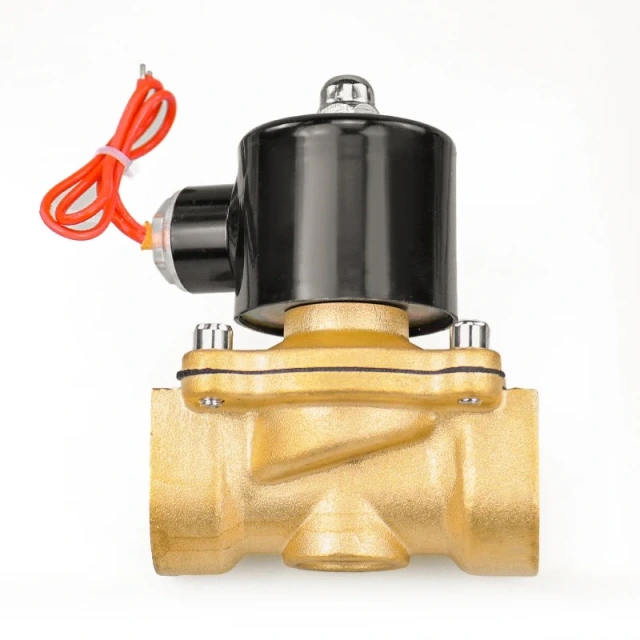
In the coming years, we can expect to see further combination of ACVs into wise, interconnected systems that boost energy effectiveness, decrease downtime, and give unprecedented levels of control and automation. The capacity for development in this room is vast, and automated control shutoffs will certainly remain to be at the forefront of liquid control technology.