Recognizing Automatic Control Valves: Basics to Advanced Applications


In the domain of fluid control, Automatic Control Valves stand for a pinnacle of precision design and play an important duty in a myriad of industrial, municipal, and commercial setups. From keeping optimal stress, circulation, and level in pipelines to managing procedure variables in chemical plants and heating and cooling systems, automatic valves are prevalent. This comprehensive overview will certainly stroll you through the important aspects, from the fundamentals to advanced choice and upkeep of automated control shutoffs, giving you the understanding to make enlightened decisions for your tasks.
What Is an Automatic Control Valve and How Does It Work?
Automatic Control Valves (ACVs) are key elements of automated control systems, tasked with taking care of the circulation, stress, and liquid levels in numerous operational environments. They achieve this via a mix of sensors, actuators, and a very carefully developed shutoff body that can modulate and preserve the desired flow qualities under vibrant problems.
At the heart of an ACV is the actuator, which is the muscle mass moving the shutoff stem to open up or shut the path for fluid. This actuator can be controlled by a variety of systems, consisting of pneumatic, hydraulic, and digital controllers. The shutoff's body is crafted to minimize cavitation, minimize pressure decrease, and enhance control accuracy.
The concepts behind automatic control valves include a proportional-integral-derivative (PID) control loophole. Sensors measure the process variable (e.g., stress or circulation price), which is then compared to the preferred setpoint. wenhui and readjusts the actuator as necessary to remedy the discrepancy, ensuring the procedure remains within the defined restrictions.
The Advancement of Automatic Control Valves in Industrial Applications
Over the years, the evolution of automatic shutoffs has actually been marked by significant technological advancements. Typical globe shutoffs with manual change located in very early commercial arrangements were promptly changed by diaphragm- and piston-operated automatic shutoffs, which generated higher capability and integrity.
With raised automation and digitalization, modern ACVs are incorporated right into intricate control networks, communicating information back to main systems and enabling remote monitoring and adjustment. Their role in crucial framework such as water treatment plants, power generation facilities, and oil refineries can not be overemphasized.
In today's electronically connected world, the advancement of smart valves has even more changed the landscape. These valves utilize advanced sensing units and onboard microprocessors to simplify the control process, forecast upkeep requirements, and adjust to altering operational conditions extra successfully.
Comparing Pneumatically-driven, Hydraulic, and Electric Automatic Valves
When selecting an automated shutoff, among the key factors to consider is the kind of actuation system it makes use of: pneumatic, hydraulic, or electric. Each has its very own collection of advantages, and the selection relies on factors such as the application, setting, and control needs.
Pneumatically-driven valves, powered by pressed air, are understood for their quick reaction times and are typically used in high-paced manufacturing procedures where fast actuation is important. Hydraulic shutoffs are liked for their high force-to-size proportion, making them suitable for sturdy applications such as earthmoving tools and huge equipment.
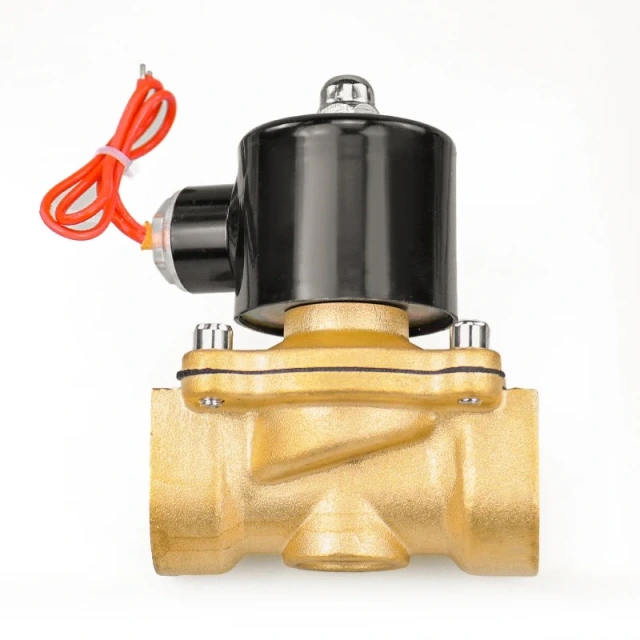
Electric automated valves, on the various other hand, have actually made substantial invasions because of their precision and controllability. With the advancements in electric actuator innovation, they can now contend toe-to-toe with pneumatically-driven and hydraulic options. Electric shutoffs provide the benefit of being energy efficient, much easier to keep, and extra fit for usage in clean-room applications where air or hydraulic liquid contamination is an issue.
Selecting the Right Automatic Control Shutoff for Your Job
The successful application of automatic control shutoffs depends upon choosing the best type, dimension, and product for the job. Sizing the shutoff correctly is crucial to guarantee it can manage the expected flow rates without excess pressure decline or cavitation, which brings about disintegration and early failing.
Product selection is similarly vital. Shutoffs may need to endure destructive chemicals, heats, or rough fluids. Common materials consist of stainless-steel for excellent rust resistance, bronze for drinkable water applications, and various crafted plastics.
Other elements to take into consideration are the control characteristics of the shutoff, such as direct, equivalent percent, or quick opening, which influence exactly how the shutoff reacts to adjustments in actuation. Lastly, combination into the existing control system and the needed qualifications for security and performance requirements ought to likewise be taken right into account.
A Situation Study in Valve Selection
Picture a scenario where a municipality requires to update the control valves in its water circulation system to boost efficiency and reduce water losses. The engineering team would initially require to assess the operating conditions and flow patterns throughout the network to determine important factors where automated control valves are essential.
For this application, they could pick electrical automatic control valves for their exact control abilities and compatibility with the data purchase system. Sizing the valves based upon peak demand and pressure needs will certainly be essential to stop over- or under-sizing. Materials would certainly be picked based upon the water top quality parameters, with considerations for safe and clean water criteria and long-lasting reliability.
The selected shutoffs would then require to show conformity with market policies and requirements, and their installation would be gone along with by a carefully designed upkeep plan to ensure continuous performance.
Upkeep Tips for Long-Term Dependability of Automatic Control Valves
Correct maintenance is the cornerstone of prolonging the life and efficiency of automated control shutoffs. Relying on the sort of valve and the application, normal maintenance can range from standard evaluations to extra extensive servicing.
mac solenoid valve for ACVs include:
Routine calibration and screening of the actuators to guarantee they react accurately to manage signals.
Inspection of the shutoff body and trim for indicators of wear or damages, which can influence securing and lead to leakages.
Lubrication of moving parts for pneumatic and hydraulic valves to keep smooth procedure.
Looking for air or fluid leakages that can compromise the actuator's performance.
Periodic substitute of putting on components, such as seals and gaskets, to stop unexpected failures.
By adhering to a structured maintenance timetable and immediately dealing with any type of issues that emerge, companies can guarantee the constant and reliable procedure of their automatic control shutoffs.
Wanting to the Future of Automatic Control Valves
The development of automatic control shutoffs is much from over. With the development of Market 4.0 and the Internet of Points (IoT), we are getting in an era where valves are not just easy control tools however active participants in the optimization of industrial processes.
In the coming years, we can anticipate to see further integration of ACVs right into clever, interconnected systems that boost energy efficiency, decrease downtime, and give extraordinary levels of control and automation. The potential for innovation in this room is vast, and automatic control shutoffs will certainly remain to be at the center of fluid control innovation.