The Art and Scientific Research of Rotomolding: Crafting Accuracy Urea Tanks


Rotomolding, additionally called rotational molding, is a manufacturing process utilized to generate hollow plastic components. One of one of the most popular applications of rotomolding is the manufacturing of urea storage tanks. Urea containers are a necessary part of diesel motor, used to save the urea option that helps in reducing emissions. In this blog, we will check out the art and science of rotomolding urea storage tanks, covering the technical facets of the procedure, innovations in mold layout, and the significance of balancing aesthetics and capability.
The Technical Aspects of Rotomolding Urea Containers
Rotomolding urea containers includes an intricate procedure that calls for mindful focus to various technical facets. First, the mold is heated to a particular temperature, generally between 300 ° F and 400 ° F. This temperature is critical to accomplishing uniform heating of the mold throughout the process. Next, Chunxu determined quantity of polymer powder is positioned in the mold, which is then secured and turned along two vertical axes. The simultaneous rotation causes the polymer powder to coat the interior surfaces of the mold, developing a thin, uniform layer. The mold is then cooled to solidify the polymer, and the finished product is removed.
Material Scientific Research: Enhancing the Residences of Urea Storage Tanks
The polymer made use of in rotomolding urea tanks is typically polyethylene or polypropylene. Nonetheless, the product properties can be improved to satisfy certain demands. For instance, the polymer can be reinforced with glass fibers to enhance strength or blended with various other products to enhance chemical resistance. Antistatic additives may additionally be added to avoid static build-up, which is a critical security concern in hazardous settings.
Technologies in Mold Design for Urea Container Production
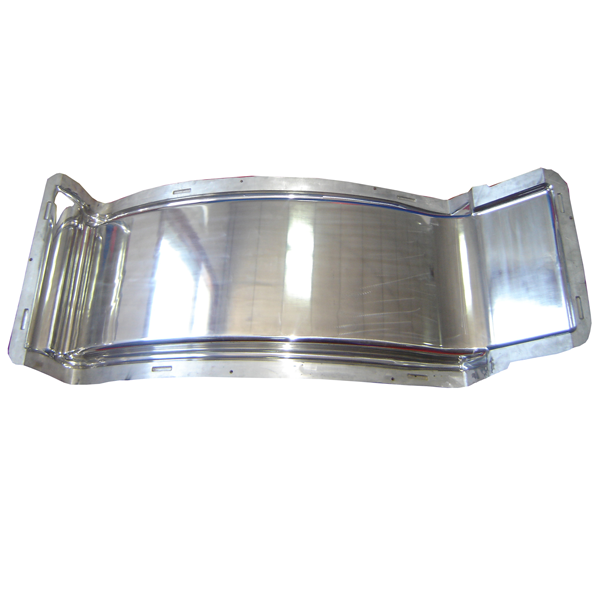
Mold and mildew design is an important consider the top quality and accuracy of rotomolded urea containers. Cutting-edge mold styles are consistently being established to increase manufacturing performance while maintaining uniformity and high quality. For Chunxu , some more recent molds incorporate inner baffles and ribs that improve the architectural stability of the urea container while decreasing the quantity of product needed. Other mold and mildew layouts consist of multiple cavities, enabling simultaneous production of numerous components and minimizing manufacturing time.
Simplifying Production: Performance in the Rotomolding Process
Efficiency in the rotomolding procedure is essential to reducing manufacturing expenses and enhancing earnings. One means to enhance production is by utilizing robotic systems to lots and dump the molds, minimizing hand-operated labor and lessening the threat of human error. Automated systems can likewise be utilized to manage the temperature and timing of the rotomolding procedure, guaranteeing consistency and precision.
Stabilizing Appearances and Capability in Urea Container Style
While the functionality of urea containers is critical, it is also vital to think about the visual qualities of the end product. Visually pleasing urea tanks can improve the regarded worth of the item and add to a positive client experience. Additionally, design attributes can be incorporated into urea storage tanks to make them extra useful, such as integrated mounting brackets or customized electrical outlets.
In verdict, rotomolding modern technology has changed the production of urea containers, enabling for the creation of high-grade, precision components. The technical aspects of the rotomolding procedure, consisting of mold layout and product science, are vital to accomplishing constant outcomes. Developments in mold design and automation have actually enhanced production effectiveness and quality, while balancing aesthetics and performance is required to develop a successful item. In general, the art and science of rotomolding urea tanks is a remarkable topic and one that plays a crucial function in reducing discharges and enhancing the atmosphere.