The Future of Proximity Sensors in Industry 4.0


In the age of Industry 4.0, automation and information exchange are fundamentally transforming the production landscape. At proximity switches of this transformation lie proximity sensing units, devices that are ending up being extra innovative and critical than ever before. This message will certainly take you on an excursion of how closeness sensing units are improving industrial processes and products. I'll also present you to a sophisticated design from Ge-Ding, the Z1-GPS-23R, and explain why investing in sophisticated closeness picking up services is not just future-proofing but a prompt requirement.
Table of Contents
Comprehending Distance Sensors: Types and Applications
Incorporating Proximity Switches Over right into Smart Factories
The Role of Proximity Sensors in Enhancing Automation
Checking Out the Z1-GPS-23R Model from Ge-Ding
Why Sector 4.0 Relies on Advanced Distance Sensing Solutions
Understanding Closeness Sensors: Kinds and Applications
Distance sensing units are non-contact tools that can finding the visibility or absence of an object. They do so without physical contact-- enhancing performance and dependability. There are several sorts of closeness sensors, consisting of inductive, capacitive, ultrasonic, and magnetic (reed) switches, each suitable for various applications and atmospheres. Industrial usage spans from straightforward detection tasks to extra intricate surveillance and control operations within a variety of markets.
Integrating Closeness Switches right into Smart Manufacturing Facilities
Smart factories are the pivot of Sector 4.0, where the merging of IoT, AI, and advanced robotics happen. Proximity buttons, the workhorses behind the scene, interact with machinery, conveyors, and robotics to offer real-time information necessary for intelligent manufacturing. By aiding in the automation of jobs that when required human intervention, closeness switches reduce errors, boost performance, and reduced functional prices.
The Role of Distance Sensors in Enhancing Automation
Automation is not practically speed; it's regarding precision, uniformity, and versatility. Closeness sensors enable equipments to properly discover the placement of products and components, allowing for accurate adjustment and control. Whether it's assisting a production line, ensuring right supply management, or handling elaborate robot procedures, proximity sensing units are at the core of driving the automation surge.
Discovering the Z1-GPS-23R Design from Ge-Ding
The Z1-GPS-23R is an advanced version from Ge-Ding that exhibits the advanced capabilities of contemporary proximity sensing units. With a robust design for commercial settings and a substantial picking up array, this sensor offers unparalleled toughness and performance. Its compatibility with various products and things dimensions, in addition to a focus on power efficiency, makes it a perfect choice for forward-thinking makers looking to enhance their operations.
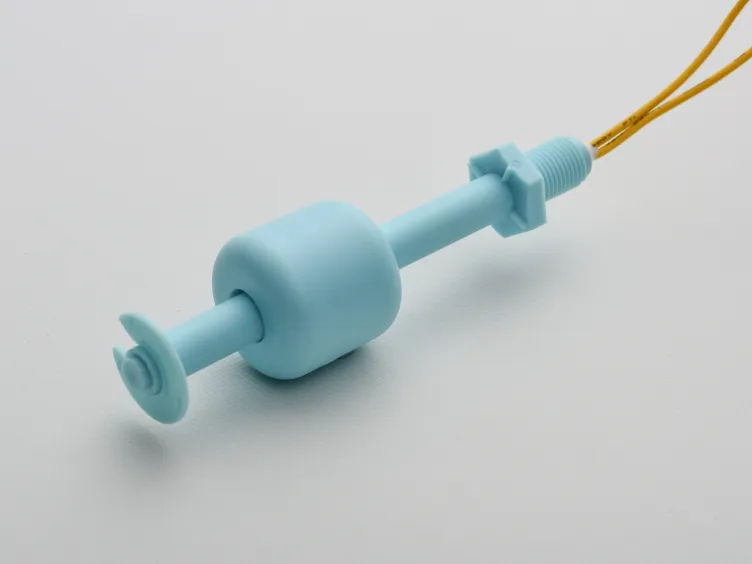
Geo-Ding's commitment to development and item evolution guarantees that the Z1-GPS-23R not only satisfies but goes beyond the rigorous needs of Market 4.0. Furnished with features like self-diagnosis and remote picking up adjustment, it paves the means for a highly responsive and adaptive industrial environment.
Why Market 4.0 Count On Advanced Proximity Noticing Solutions
In a globe where every split second matters, the value of sophisticated closeness sensing units can not be overstated. Industry 4.0 prospers on the dexterity and integrity these sensors give. From decreasing downtime and maintenance prices to allowing anticipating upkeep via large data analytics, distance sensing units have become a sign for the future of commercial automation.
Buying the latest distance sensing technology does more than assure an one-upmanship; it ensures services can handle the complexities and dynamism of the contemporary commercial eco-system. It's about remaining not only in advance yet appropriate in a period where innovation is the only constant.
In verdict, the prevalent combination of proximity sensors in Sector 4.0 exhibits their improvement from standard things detectors to indispensable parts of the modern manufacturing process. By understanding the kinds, sensible applications, and particular versions like the Z1-GPS-23R, sectors can maximize their procedures and be well-prepared for the future. If you're seeking to step right into the future of industrial automation, it starts with the ideal sensor modern technology.